Kankakee Marsh
Ecoregions: Kankakee Marsh
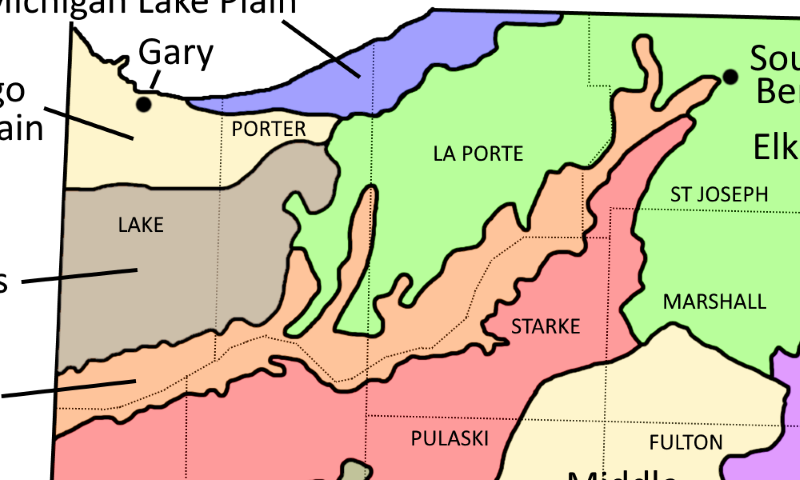
The Kankakee Marsh Ecoregion, shown in orange
The Kankakee Marsh ecoregion was once covered by extensive northern swamp forests, wet prairies, and bulrush-cattail marshes. Today, most of these distinctive communities are gone and only a narrow wooded corridor remains along the Kankakee River, which has been channelized and straightened out for agricultural drainage purposes. Source: US EPA
The Great Kankakee Marsh was once known as the Everglades of the North; waterfowl and fur-bearing animals thrived there in such numbers that duck hunters especially came from the east coast and even Europe to hunt. River channelization and drainage of adjacent wetlands brought an end to what has been described as the largest continuous wetland in North America. Although virtually all of the Kankakee River in Indiana has been ditched and straightened, you can still see evidence of the old meanders by looking at aerial images of the area on Google Maps. The Indiana DNR owns and maintains the LaSalle Fish & Wildlife Area, a 4,500 acre property that lies mostly along the southern bank of the river in Newton County where it's possible to access a few isolated bits of the old rivercourse. Because hunting occurs here in season, be sure to check before visiting to make sure that you can move around the property safely.
Thank you for visiting ecoindiana.net. I hope you find it useful.
Mike Habeck